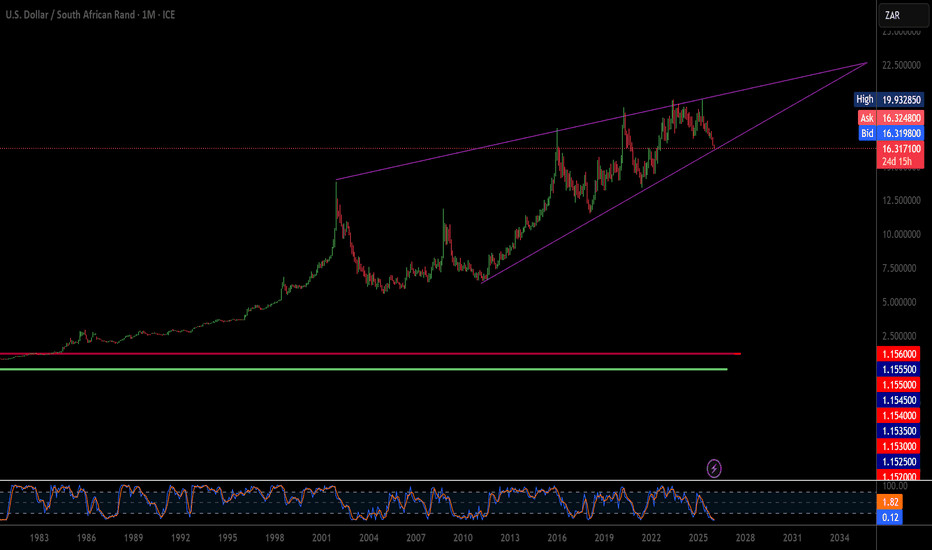
USDZAR--SHORT
--Short bias
--Entry and tp levels are as shown on the chart
Comment
Share




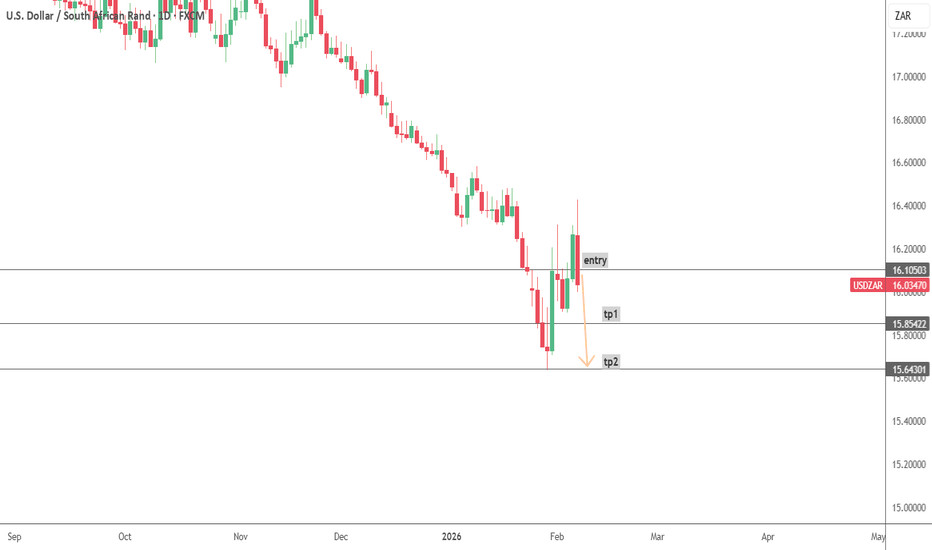
USDZAR--SHORT
--Short bias
--Entry and tp levels are as shown on the chart
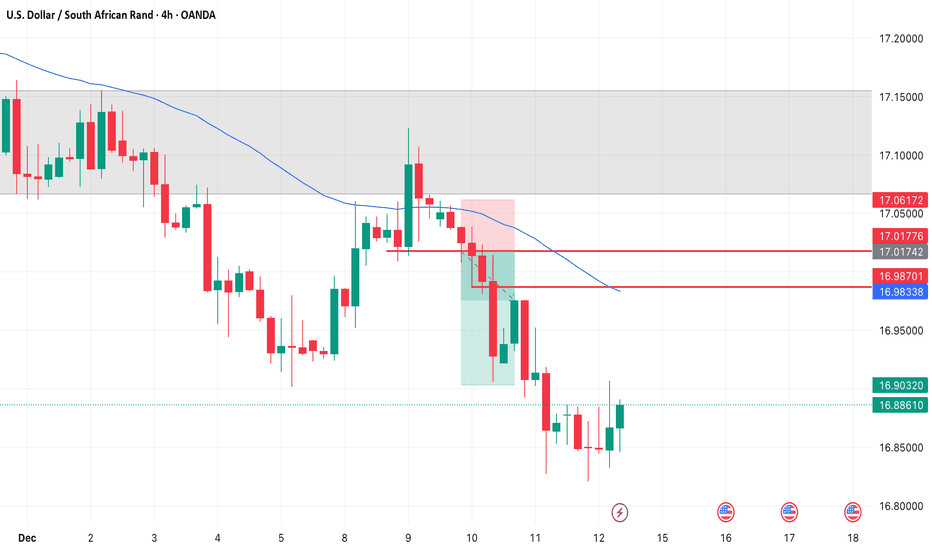
USDZAR TRADE BREAKDOWN WIN 12.08.2025
A+ set up for USDZAR with 2.61RR. Market come to my set up then took the trade.
USDZAR Technical Point of View
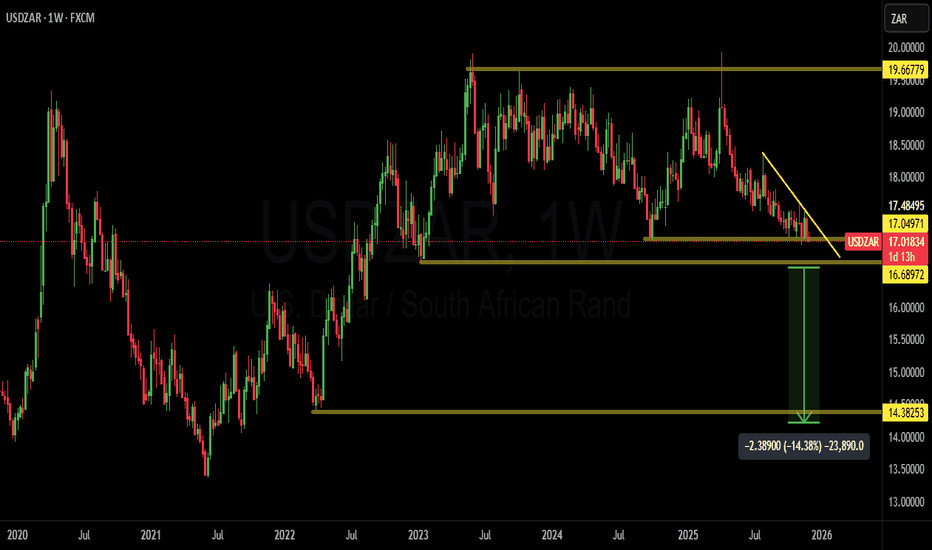
What can we say as technicians.
The price is trading near a super strong support area, testing it since 2022.
Looking a the technical analysis on this pair on the high weekly timeframe, sellers might just step in and drive prices lower. Despite what is going on between the US and South Africa the Rand is keeping gaining ground.
Leaving politics and all other fundamentals out of this equations, what do you think. Will seller show muscle and drive prices lower?
Would love to hear your insights and opinions.
Week-Ahead USDZAR Forward Rates & Hedging Outlook
This report provides a week-ahead view on USDZAR spot and forward markets, with a specific focus on what the forward curve is signalling for South African corporates. While spot USDZAR is expected to remain range-bound, the forward curve embeds increasingly meaningful risk premia beyond the short end. The implication is clear: value lies less in directional spot views and more in optimal hedge timing, tenor selection, and risk budgeting.
1. Spot USDZAR: Current Context
USDZAR enters the week trading in the mid-16.40s to mid-16.60s, reflecting improved domestic credibility, still-supportive global carry conditions, and thin early-January liquidity. Price action suggests consolidation rather than trend acceleration.
Key spot reference ranges (week ahead):
Support: 16.35 – 16.45
Resistance: 16.65 – 16.80
Narrative risk level: sustained break above 17.00
For corporates, this argues against aggressive directional positioning and instead supports structured forward hedging.
2. Forward Curve Analysis: Key Signals
2.1 Front-End (0–3 Months): Policy-Driven Carry
Short-dated forward points remain dominated by the interest-rate differential between South Africa and the United States. The 1-month forward premium reflects carry rather than stress, indicating orderly market conditions.
Implication: Short-dated forwards remain efficient hedging instruments for transactional exposure.
2.2 Medium-Term (6–12 Months): Risk Premium Emerges
From 3 months onward, forward points increase sharply. Analysis shows that a significant portion of forward pricing beyond the 1-month tenor represents risk premium rather than policy carry. This reflects market compensation for fiscal, political, and reform-execution uncertainty.
Implication: The curve increasingly rewards export
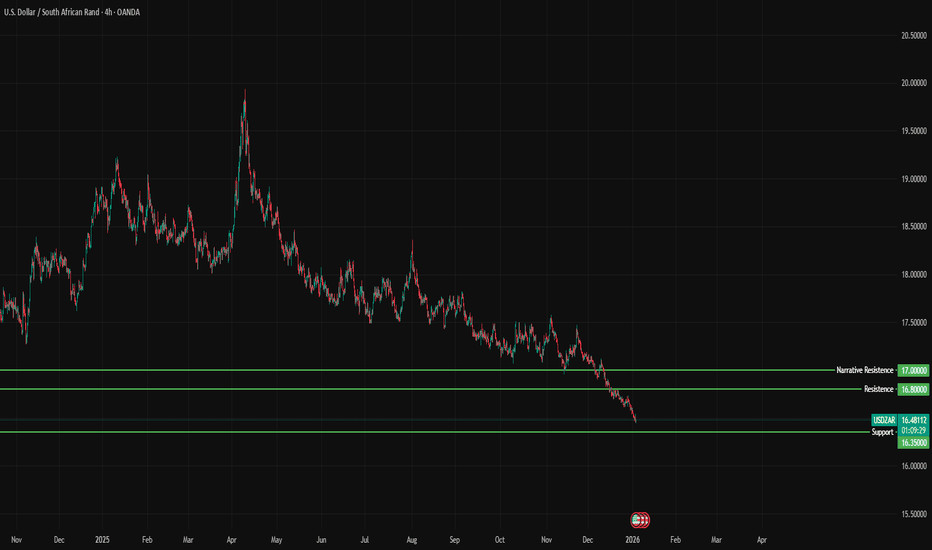
USD/ZAR: The Rand’s Strategic Pivot in 2026
The South African rand recently surged to 16.33 against the US dollar. This move signals a significant shift in emerging market sentiment. Investors now pivot away from safe-haven assets. They embrace the rand as a primary recovery play for 2026.
Macroeconomic Anchors and Monetary Easing
The South African Reserve Bank (SAR recently implemented a 3% inflation target . This bold framework provides a new anchor for price stability. Analysts expect this move to foster long-term fiscal credibility. Lower inflation expectations allow the SARB to maintain an accommodative stance.
Parallel to this, US Federal Reserve officials signaled dovish leanings. Markets now price in multiple rate cuts for the 2026 cycle. This interest rate differential heavily favors the rand. Yield-seeking investors find South African government bonds increasingly attractive.
Geopolitics and the G20 Transition
South Africa recently handed the G20 presidency to the United States. This transition marks a critical geostrategy juncture for Pretoria. Diplomatic relations with the Trump administration remain a key variable for trade. Exporters closely watch potential adjustments to the AGOA agreement .
Strategic autonomy remains a priority for South African leadership. The nation continues to balance relations with the BRICS+ bloc and Western partners. This "non-aligned" approach secures diverse investment flows. It also hedges against global supply chain disruptions.
High-Tech Innovation and Patent Trends
The local high-tech sector is evolving from experimentation to execution. "Agentic AI" now drives efficiency in deep-level mining operations. South Africa is filing record patents in AI-driven mineral processing and green hydrogen. These innovations attract significant venture capital