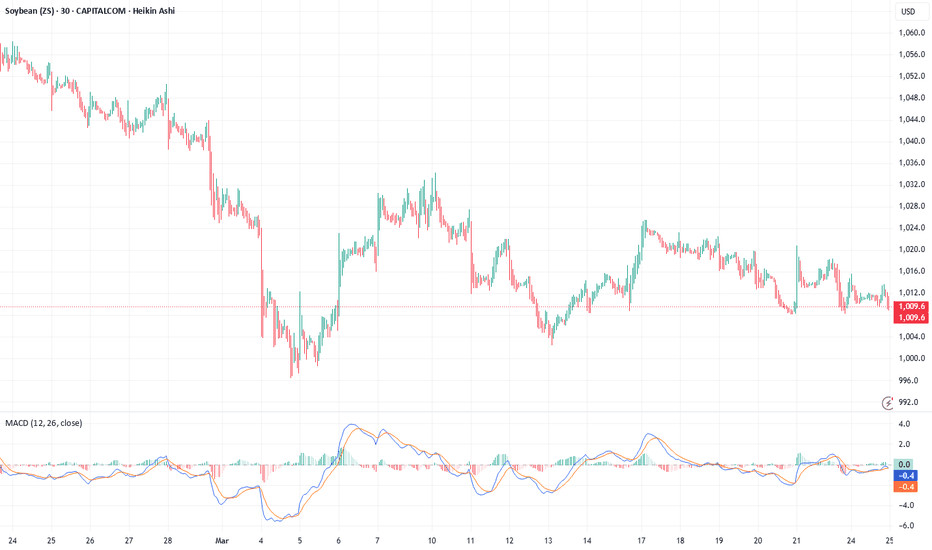
Soybean Market Trends: Impact of Exports and Production Forecast
Production Forecasts and Supply Adjustments
The USDA's latest projections indicate a downward revision in global soybean production, primarily due to adverse weather conditions in South America. Brazil, the world’s largest soybean producer, has faced inconsistent rainfall patterns, leading to a production estimate of 153 million metric tons (MMT), a 1.5 MMT decrease from previous forecasts. Similarly, Argentina's output is now expected to reach 49.5 MMT, reflecting a reduction of 0.5 MMT due to ongoing drought concerns.
Meanwhile, U.S. soybean production remains steady at 112.5 MMT, with domestic ending stocks revised up to 8.5 MMT as lower export demand contributes to higher carryover supplies. This increase in stock levels could exert downward pressure on U.S. soybean prices in the coming months.
Export Dynamics and Demand Shifts
The global soybean trade landscape is also shifting. While China remains the dominant buyer, its import demand has softened slightly, leading to a 1 MMT reduction in projected purchases, now standing at 97 MMT for the 2024/25 season. This decline is attributed to higher domestic inventories and efforts to diversify feed sources.
Conversely, the U.S. has adjusted its export projections downward by 2 MMT, now estimated at 47.5 MMT, as Brazil continues to dominate the market with competitive pricing. The depreciation of the Brazilian real against the U.S. dollar has made Brazilian soybeans more attractive to global buyers, reinforcing Brazil’s position as the leading exporter. Additionally, with about 74% of Brazil’s soybean crop already harvested, up from 69% last year, the country is well-positioned to capture further market share.
Further complicating U.S. export prospects, President Trump’s plan to impose sweeping reciprocal tari