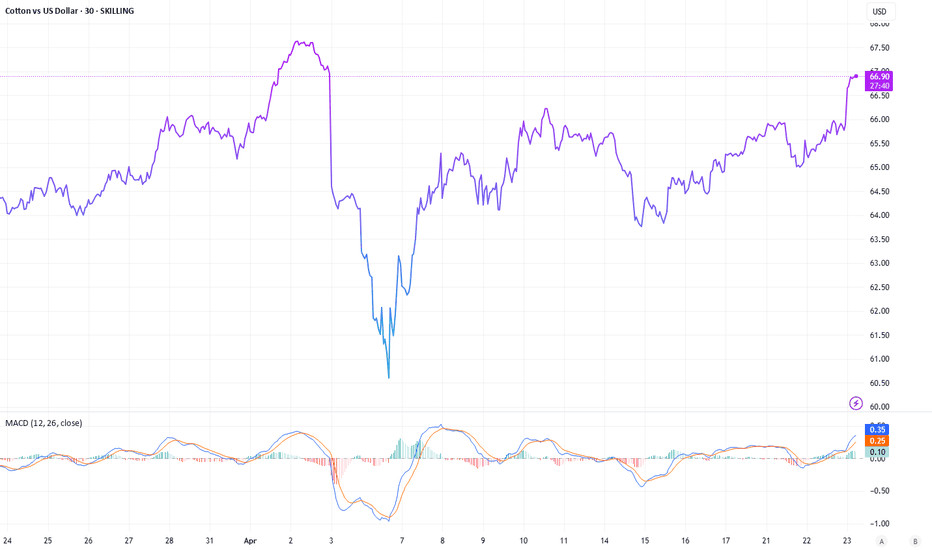
Cotton Market Correction: Trading the Global Stocks Increase
The global cotton market is signaling a potential correction in April 2025, as outlined in the USDAs World Agricultural Supply and Demand Estimates (WASDE) report released on April 10. The report projects a 520,000-bale increase in global ending stocks to 78.86 million bales, driven by lower consumption in key markets like China and Indonesia. In the US, cotton exports are down 100,000 bales to 10.9 million, with the season-average price holding steady at 63 cents per pound. These dynamics suggest bearish pressure on cotton futures, offering traders a chance to capitalize on short-term price movements. This article analyzes the cotton markets current signals, updated with the latest price action, and provides actionable trading strategies to navigate this correction.
Cotton Market Dynamics: Rising Stocks, Falling Demand
The WASDE report highlights a significant shift in the global cotton market for the 2024/25 season. World ending stocks are raised by 520,000 bales to 78.86 million 480-lb. bales, primarily due to reduced consumption in China and Indonesia, where textile mill use is down 520,000 bales to 116.02 million bales. This decline in demand is partially offset by an increase in Turkey (up 100,000 bales), but overall, global trade is down, with exports reduced by 380,000 bales to 42.33 million bales. Key exporters like Australia, Brazil, the US, and Cote dIvoire see lower shipments, with the US specifically reporting a 100,000-bale drop in exports to 10.9 million bales, reflecting weaker global demand.
In the US, the cotton balance sheet shows ending stocks rising to 5.0 million bales (up 100,000 bales), as the export reduction directly impacts inventory levels. Despite this supply buildup, the season-average upland farm price remains unchanged at 63